Introduction
The internet is the most powerful space for communication, debate, and access to information in human history. Every day, millions of people share their opinions, share content, and participate in discussions that shape the contours of culture, politics, and society. It is this same freedom that simultaneously makes the web vibrant and throws up one of the greatest ethical and political dilemmas of our times: where should we draw the line between free expression and digital censorship?
In recent years, controversies over content moderation, misinformation, hate speech, and political manipulation have escalated dramatically. Governments, corporations, and users are all debating who should decide what can be said online and under what conditions. The result is a complex and constantly shifting landscape where freedom of speech collides with the need to protect individuals and communities from harm.
The Promise and Challenge of Digital Freedom
When the internet first became widely available, it was hailed as a democratizing tool a place where people of any nationality, class, or ideology could express themselves freely. That ideal is still deeply ingrained in the culture of the web. But as platforms like Facebook, X, YouTube, and TikTok have scaled up, the logistical difficulty of moderating billions of daily interactions has made absolute freedom an impossibility in practice.
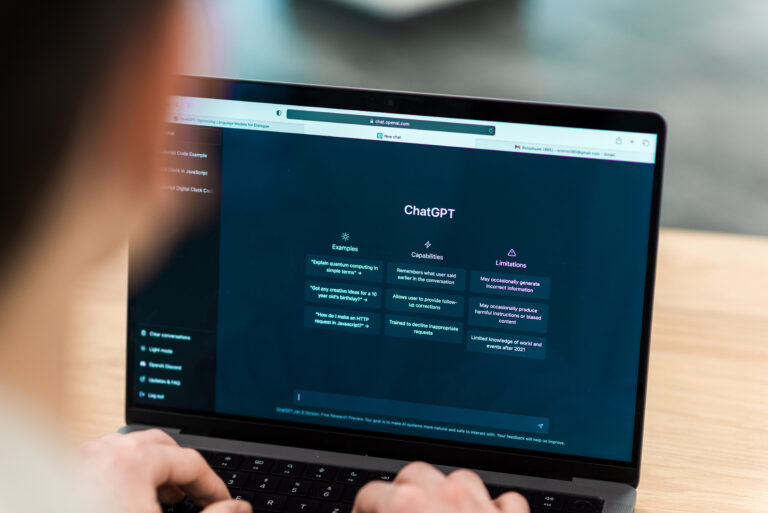
Online communication now takes place within private ecosystems owned by technology giants. These platforms define their own rules of conduct, design algorithms that decide what we see, and reserve the right to suspend or remove content. In practice, this hands them unprecedented control over the global conversation. The tension between public freedom and private regulation has never been greater.
The Rise of Content Moderation
Content moderation emerged as a necessary response to the darker side of digital freedom. Without some way of regulating online spaces, they can quickly become a hotbed for misinformation, harassment, extremism, and hate speech. This is reflected in both the European Union’s Digital Services Act (DSA) and the U.S. debates over Section 230 of the Communications Decency Act.
Now billions of posts are filtered daily by a combination of moderation teams, artificial intelligence systems, and community guidelines. At least in theory, the aim is to protect users and keep healthy environments for dialogue. Meanwhile, execution is far from ideal. Automated systems regularly misunderstand context, and human moderators face intense pressure to make rapid judgments in complex matters that are often moral and political in nature.
A recent 2023 study from the Harvard Kennedy School finds that, in general, moderation algorithms disproportionately silence minority or dissenting voices. This is especially true when nuances of a language or culture are involved. The line between protecting users and silencing perspectives is dangerously thin.
Governmental Censorship and Digital Authoritarianism
While corporate moderation raises ethical concerns, state imposed censorship poses an even more serious threat to freedom of expression. Many governments have transformed the internet into a space that is both controlled and monitored, under the pretext of national security or social stability.
The so called Great Firewall blocks access to Western websites in China, and millions of online posts are removed each day for containing “sensitive” content. Similar strategies have been followed by Russia, Iran, and other regimes, combining surveillance with direct censorship of opposition voices. The result is a form of digital authoritarianism, where information becomes a tool of political power.
Yet even in democratic societies, the temptation to regulate online speech is on the rise. During crises from pandemics to elections governments frequently press platforms to take down harmful or false content. Sometimes this is justified, but it always raises an uncomfortable question: who defines what is “harmful,” and in whose interest?
The Misinformation Dilemma
One of the arguments most cited in favor of greater moderation is the fight against misinformation. False news, manipulated images, and conspiracy theories spread online faster than factual information, often influencing elections or public health decisions. The 2016 US presidential election and the global pandemic both showed ways that digital misinformation can have real world consequences.
This, however, is a battle that can quickly slip into overreach: as platforms and governments suppress some narratives “for safety,” they risk engendering an environment of mistrust. In such cases, users may feel censored or manipulated, further deepening polarization. It’s for this reason that transparency around moderation decisions is critical in maintaining public confidence.
The Role of Algorithms
More than explicit censorship, algorithms themselves shape what we see and what we don’t. Invisible systems link and prioritize content according to user engagement, emotion, and profitability. The more outrage or excitement a post generates, the more likely it is to spread. Consequently, nuanced or moderate opinions get buried beneath viral extremes.
A 2022 report from the Oxford Internet Institute found that algorithmic amplification is more responsible for the proliferation of disinformation than deliberate propaganda campaigns. In this sense, digital censorship is not just about deleting content it’s about those invisible choices determining what gets visibility in the first place.
Toward a Balanced Digital Ethic
But striking a fair balance between expression and moderation requires something more than new laws or smarter algorithms; it demands a shared digital ethic. Platforms should be transparent about their moderation policies, governments should respect the right to dissent, and users should take responsibility for what they share.
Education plays a key role here: the promotion of digital literacy means offering citizens an ability to evaluate sources, detect bias, and verify information, enabling them to use online spaces effectively with less reliance on centralized gatekeepers.
Meanwhile, companies should invest in context aware AI systems that understand cultural and linguistic subtleties and reduce bias and arbitrary censorship. Collaboration among human moderators, AI, and independent oversight bodies could also ensure accountability without sacrificing freedom.
A Human Perspective on Free Speech
Personally, the discussion of censorship is not an abstract one. Each day, each of us experiences this when a comment gets flagged, a video gets removed, or a post gets hidden from the feeds of others. Sometimes we agree with those decisions; at other times, they feel unjustified. This emotional response reveals something deeper: our relationship to free expression is tied to identity and belonging.
Freedom of speech online isn’t about saying anything without consequence it’s about having the space to participate in public debate without fear of arbitrary silence. It is, without doubt, one of the defining challenges of our generation to maintain that balance in a world of global platforms and political interests.
Conclusion
The internet was born out of openness, a promise of a place where ideas could flow freely across borders. But the digital landscape has matured, with that openness running head on into the realities of misinformation, hate speech, and manipulation.
There is no way to achieve a balance between censorship and freedom of expression once and for all. Finding this balance is actually an ongoing, ever changing negotiation among technology, ethics, and power. Whether we will continue to be able to enjoy the principle of free speech will depend on whether we can make safer, more respectful online spaces.
Ultimately, protecting freedom in the digital age means trusting people with truth, not shielding them from it. It’s a difficult challenge but an essential one if we are to preserve the democratic spirit the internet was meant to embody.
About the Author